
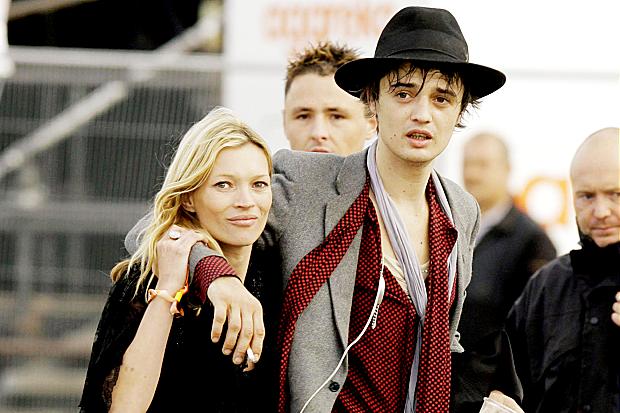
2005. Wife beaters, anchor tattoos, British Rock ruling radios overseas, and the launch of a summer look that will forever be known as “festival style”. Amy Winehouse was the Queen of Camden and Pete Doherty and Kate Moss were up to nothing but trouble, being seen in their high-low get-ups of designer frocks, loose silk scarves, vintage army coats and lots of mud. The look was just messy enough to seem effortless. Is he walking home the morning after from a wild bender, or is he just that cool slightly dishevelled fella in the coffee shop?
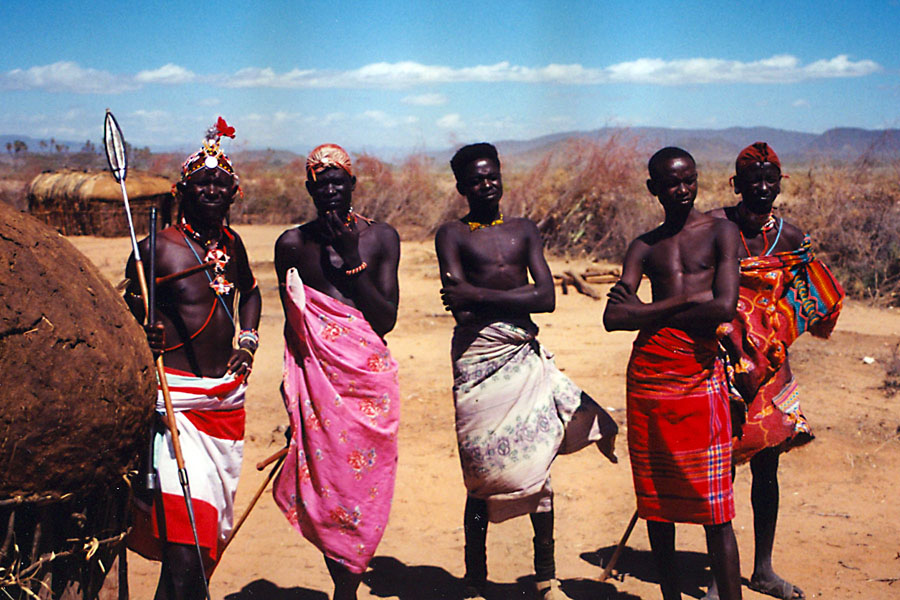
Since the beginning of time we as humans have been divided into tribes. Your body tribal paint or jewellery, and later on your uniform of choice, defined where you sat in society. You lived in what you wore. You were what you dressed like, be that a painter, a hippy, or a skater. The 2005 equivalent of tribal uniform for the counter-cultures was dressing like a member of The Strokes, or the Libertines, inspired by their gig you saw at the weekend. No one could dress like their rock star idols unless they bought magazines or saw them live. There was no Instagram, no style blogs to tell you that a Black Flag T-shirt looks cool when you in fact have no idea they were once a band. When did our appearances stop reflecting our musical and artistic cultural interests?
Fast-forward ten years and all the good vintage shops are now empty, or just a graveyard of awful Christmas jumpers. It’s 2015 and hip-hop, R&B, and auto-tune now rule the radio. The style tribes we once so properly defined have since been blurred by the likes of rap artists collaborating with rock musicians. A pioneer in this movement is none other than Pharrell Williams, of Neptunes fame. Pharrell earned the nickname “Skateboard P” in high school, and the name stuck. Whilst forming N*E*R*D with childhood friend Chad Hugo, the group was arguably the first of its kind to take keyboard, percussion, and guitar sounds and combine rap beats, colloquial street terms, and R&B influenced choruses.
What makes Pharrell so likeable? I’m sure N*E*R*D means a lot of things to a lot of people. Skateboard P’s defining style both musically and sartorially (Adidas Tracksuits, That Hat (insert link) Clockwork Orange T-shirts) has unleashed heaps of copycats and “Hype Beasts” (a term for anyone who cites Kanye for Style inspiration, but we’ll get to that later). Tyler the Creator, rapper, artist and openly massive N*E*R*D fan cites Pharell as his idol and famously cried while watching him perform his rock/rap hit, “Rock star” (http://uk.complex.com/music/2014/11/tyler-creator-cries-watching-nerd-rock-star). Tyler the Creator’s own collective, Odd Future all skateboard, wear Vans, long striped tube socks, and listen to Beach House, despite only releasing rap music. A giant clash of cultures seems to have occurred along the way, combining all elements of your idol’s looks and implementing them you’re your style. This is a far cry from my early childhood memories of my cousin attending a local public high school where the “rockers” and the “rappers’” often found themselves in big fistfights. This brings me to my next point: The Internet.

Instagram allows us to create our very-own curated world. All of our favourite artists, musicians, magazines, and fashion blogs can be tracked, traced, and followed right on our smartphones. If you want a look for something to wear this Friday, you can follow someone like @Thefixformen for influence. Rather than scavenging all of the style pages and magazines, Instagram has made editing your favourite looks and shops easy. Jay-Z, The Sex Pistols, and a Nick Knight studio shoot can all inspire your style choices in a matter of seconds.
Long gone are the days when you must hop on the train to travel to a faraway hole in the wall to find that cool niche designer. Now all you have to do is tap that perfectly-filtered square once to see all style credits – and lucky you – you are redirected (if you wish) straight to a click-and buy screen to the designer’s or shops website. This culture has even created the rise of “Style Stars” (People famous for dressing cool, but not doing much else).
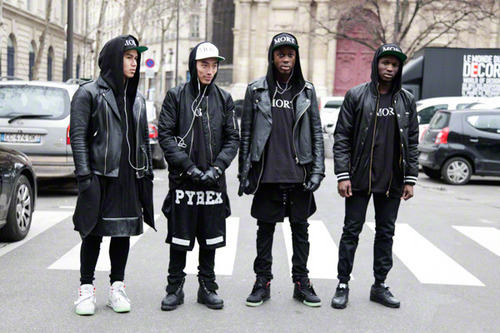
Being able to curate who you follow on Instagram is an easy way to compile the blogs you look to for inspiration. Without having to make any form of human contact or be a part of any style tribe, you can choose what style tribe you want to be apart of – and share it with the world. With the right look, angle, outfit, and a shout out to which labels you’re rocking, with luck, the label PR’s may give you a shout-out, creating the beautiful social media cycle we’ve all come to know and love.
When A$AP Rocky dropped his first mix tape, Live, Love, A$AP in 2011, he repeatedly name-dropped different avant-garde labels such as Maison Martin Margiela, Raf Simons, and Rick Owens. Back then they were considered cult-labels worn only by the style-conscious. A$AP invited his fans into his carefully curated world. In his first music video, one of his mob members even sported electric-green hair; bringing high-fashion punk looks to Harlem street culture and the mainstream. Rocky is now a famous style star in his own right, a fixture on the front-row at Fashion weeks, and was once muse to street wear labels such as Hood By Air and Pyrex. Some runway designers have even embraced this crossover of cultures, combining dapper tailoring, street wears, and even rave wear, such as Acne Studios Menswear 2015 show.
In what seems like a backlash, some rebellious designers are trying to clearly differentiate former trends, such as Hedi Slimane, known to some as the God of the rock and roll androgynous comeback, which he succeeded in doing with Dior Homme from 2000-2007. His years as creative director of Dior were inspired by all major rock decades from the sixties and seventies, to the grungy 90s – cue tight pantsuits, Chelsea boots, silky scarves, lots of ripped holes and flannel.
Now having taken the helms of Creative Director at Saint Laurent, Slimane has resurrected his rock and roll signature in his menswear collections, in something that seems to be staged as an anti-social media campaign, using mostly legendary rock stars as the face of his adverts (Think Courtney Love, Patti Smith, and Sonic Youth’s Kim Gordon). Yet it’s the major style blogs who are reposting these images, whether they relate to his runway looks or not.
What all of these style stars have in common is the ability to move social media. Kanye West famously wore a women’s Celine shirt in 2011, causing a massive social-media frenzy along the blogger set. Everyone on the blogosphere had his opinion, but he was already becoming a fashion icon in the making. The iconic print has since been seen on the bottom of skateboards in blogger collaborations for years now. And I’m sure we all remember his BBC Radio interview with Zane Lowe…Leather jogging pants, anyone?
Older generations would argue that the idea of artists collaborating with skateboard or street wear brands, selling for hundreds of dollars completely goes against what the counter cultures were all about-going against the grain and creating your own tribe where you feel you belong. With our immediate click and buy culture, we can now pretend to belong wherever we like.
In terms of the fashion cycle, we all know how it works – street-style trends become popular, designers get inspired and the look trickles down to the high street – yet now, it seems some of those steps are now being skipped along the way. Instagram and fashion blogs have allowed us to pick and choose which trends we want to follow, creating our own digital-fashion tribes. We no longer look to music movements as our style guides, but aesthetically pleasing online content that helps shape our closet. We can thank Instagram for helping make regular Joes look great. There are no longer silent tribal nods on the street to someone within your tribe who is identifiable by the clothing they are wearing, or the bands they listen to. We can now double-tap endless pages in a cyber-salute. This may upset the innovators, but there’s a lot to be thankful for. The Internet has helped shaped careers, online shops, and given a platform for many unknown, talented brands. A quick snap and post while you’re at the bus stop one morning, and your opportunities are endless. All this at your fingertips, and you didn’t even have to pull the all-night bender. Fake it till you make it, man.
 CAFE CON EHE
